Students Aren’t Lazy - They’re Telling Us Something
“Students these days just don’t care about learning.”
You have probably heard some version of this complaint in a faculty meeting, a staff lounge, or a frustrated conversation after class.

“They’re passive.”
“They only do the minimum.”
“They won’t even try.”
I recently took part in a faculty problem-solving session that slowly turned into a complaint-and-blame session. The frustration was real. Too many students are not engaged in the ways we want or expect.
But as the conversation continued, I noticed something.
We kept talking about students as though they were the only people with the power to change.
Picture a teacher looking at a stack of assignments at the end of a long day. Too few turned in. She has explained the directions twice, posted reminders, and offered extra help. Across the room, one student has his hood pulled low while another scrolls beneath the desk. The teacher feels that familiar mix of anger and defeat: “Why am I working harder than they are?” It’s an understandable question… but it is not the most useful one.
The better question is this: Who has the power to change what happens next?
Blaming students may explain our frustration, but it will never improve tomorrow’s lesson.
What changes when we stop calling children “at risk”.
Labels do not sit quietly on paper; they follow children into classrooms.
It is easy to build a case against disengaged students.
Some live in poverty. Some are being raised in single-parent households. Some are involved with the juvenile justice system. Some are immigrants who are still learning English. Some have disabilities. Many spend hours in front of screens and far less time moving, talking face-to-face, or building relationships.
These conditions matter. They can shape a child’s opportunities, stress level, health, and access to support.
But risk factors are not destiny.
The 1983 report A Nation at Risk helped intensify a national conversation about educational failure and reform. In the decades that followed, the language of “at-risk students” became deeply embedded in education.
The label may have been created to direct help toward children. Too often, however, it arrives in the classroom before the child does.
It whispers to us before we learn the student’s name:
“Lower your expectations.”
“Do not be surprised when this child fails.”
“Protect yourself from disappointment.”
That whisper is one of the most dangerous forces in education. Deficit thinking wears the sensible shoes of realism, but it quietly steals possibility.
Rick Miller, founder of Kids at Hope, offers a different belief:
Every child can succeed, without exception.
Instead of seeing “kids at risk,” the framework asks us to recognize “kids at hope.”
That is not empty optimism. It does not deny trauma, poverty, disability, or injustice. It changes the starting point.
A student’s circumstances may describe the road behind them, but they do not get to decide the road ahead.
Disengagement is a message, not a character flaw.
What looks like laziness may be a student’s safest available strategy.
Imagine a student named Marcus walking into algebra.
He takes the seat farthest from the teacher and drops his backpack on the floor. When the worksheet arrives, he stares at the first problem for several seconds, then jokes loudly with the student beside him. The teacher redirects him, and Marcus shrugs:

“This is stupid. I’m never going to use it.”
A few students laugh, which gives him exactly what he needs - a way to escape the work without admitting that he does not understand it. By the end of class, the worksheet is blank, and everyone has another piece of evidence that Marcus does not care.
But perhaps Marcus cares so much that trying feels dangerous.
If he tries and fails, the failure might confirm what he already fears about himself. If he refuses to try, he can tell himself that the grade does not count.
Avoidance has protected him from embarrassment.
This does not mean we ignore his behavior or remove every expectation. It means we become curious about what the behavior is doing for him.
The “lazy student” story is attractive because it is simple. It places the entire problem inside the child and releases the rest of us from responsibility. That story leans against the classroom wall with folded arms, insisting that nothing can change until the student changes first.
Disengagement is not proof a student has no motivation. It is evidence that their motivation is pointed somewhere else.
They may be motivated to avoid humiliation.
They may be motivated to protect their status with their friends.
They may be motivated to earn a grade without risking failure.
They may be motivated to disappear.
Our work begins when we stop asking, “What is wrong with this student?” and start asking, “What is this student trying to protect?”
Behavior becomes more useful when we read it as information instead of an insult.
The four ways students respond to school:
Not every student who completes the work is truly engaged.
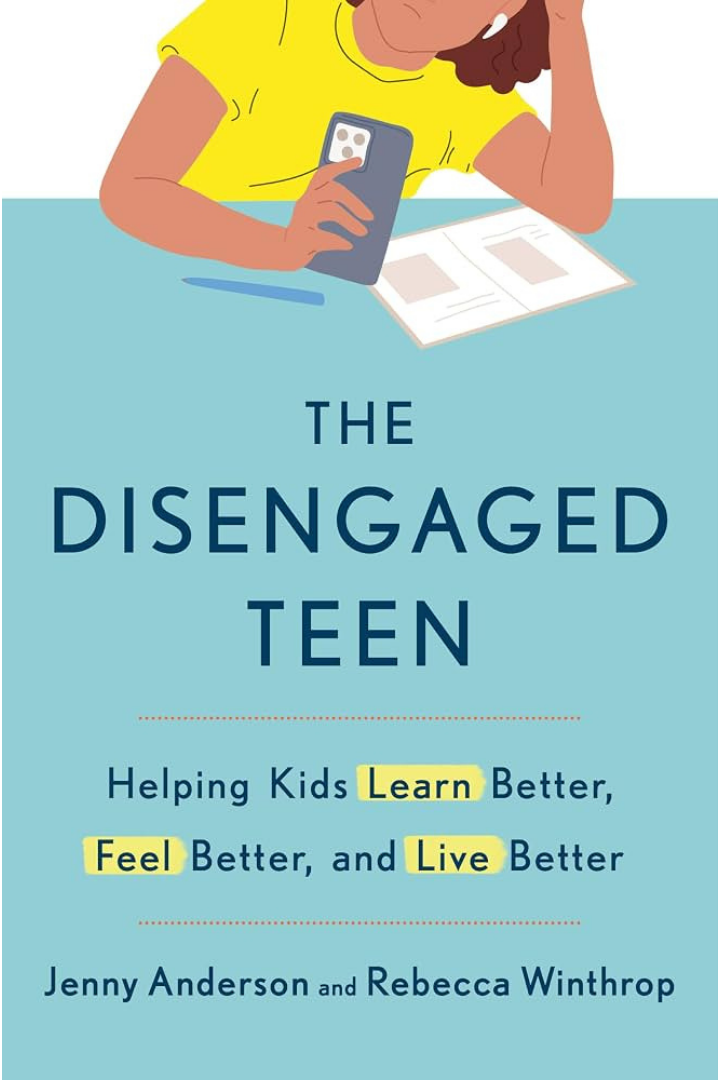
In their 2025 book, The Disengaged Teen: Helping Kids Learn Better, Feel Better, and Live Better, journalist Jenny Anderson and Brookings Institution researcher Rebecca Winthrop describe four modes that students move through:
Resister
Passenger
Achiever
Explorer
Their work grew from a five-year investigation into why so many young people lose motivation during adolescence. (Brookings)
The Resister may ignore homework, skip class, act out, or withdraw. Resistance can hide feelings of inadequacy, invisibility, or disconnection.
The Passenger moves through school doing the bare minimum. This student may see little connection between schoolwork and their interests, strengths, needs, or future.
The Achiever appears to be the success story. The work is finished. The grades are high. Yet beneath that performance may be anxiety, perfectionism, and a growing belief that personal worth depends on never failing.
The Explorer is driven by curiosity. Explorers ask questions they care about, make connections, and persist because the learning has meaning beyond a score.
These are modes, not permanent personality types. A student might be an Explorer in art, a Passenger in history, an Achiever in English, and a Resister in math.
Consider the student whose report card is filled with A’s:
She checks the online gradebook three times before breakfast. When the teacher announces an ungraded class discussion, she immediately asks if it will earn points. She avoids challenging courses because a B could damage her record. At night, she rewrites an already excellent assignment while her stomach aches. Everyone praises her engagement, yet she has learned to chase proof of success rather than learning itself.
Compliance can wear a gold star disguise.
The goal is not to turn Resisters into quieter Passengers or more anxious Achievers. The goal is to help every student become an Explorer.
We cannot punish students into curiosity.
Too many attempts to increase engagement begin with tighter control:
Add another rule.
Take away another privilege.
Attach points to every action.
Send another warning home.
Consequences have a place. Structure matters. Students need clear expectations and consistent boundaries. But compliance is not the same as engagement.
The obsession with control acts like a hall monitor in our thinking. It watches every movement, demands visible obedience, and calls the room successful when everyone is quiet. Yet a silent classroom can still be full of disconnected minds.
Reward systems can create a similar trap. When every act of learning earns a point, prize, or grade, students may begin to ask only one question: “What do I get?”
A student who works only for the reward has not learned to love learning. They have learned to negotiate a price.
Hope offers a different pathway.
In my Joyful Inclusion Hope Framework, hope is not wishful thinking. It begins with a vision of a future we want, followed by pathways that can help us reach it.
That is why we are holding our Time Travel to Special Education 2030 sessions.
We will imagine classrooms where students feel known, capable, and needed. We will listen for the sounds of meaningful discussion, productive struggle, and genuine curiosity. We will picture what teachers are doing - and what students are doing - when engagement is no longer treated as a mystery.
And we will watch how students with disabilities interact with peers and teachers, what conditions are present so they are safe to be explorers too.
Then we will work backward:
What changed?
What did adults stop doing?
What opportunities did students receive?
What structures helped them develop agency?
A hopeful vision does not allow us to ignore present problems. It gives us a reason to solve them. Control may produce short-term obedience, but hope gives students a future worth moving toward.
What teachers can do next:
The first intervention is not a new strategy; it is a better question. When a student disconnects, ask which mode you may be seeing:
Is this student resisting because the work threatens their sense of competence?
Are they riding as a Passenger because they see no meaning in the destination?
Are they achieving at a high level while quietly becoming terrified of mistakes?
Where do they already behave like an Explorer?
Then look for one small move that creates agency. Offer a meaningful choice in how students show their learning. Connect the task to a question they care about. Let students revise after receiving feedback. Build in moments when they can explain, create, investigate, or teach someone else. Name growth that is not tied to a grade.
None of these actions requires us to lower expectations. In fact, agency and high expectations belong together. Students are more likely to accept a meaningful challenge when they have some ownership of the journey.
This shift also requires us to challenge three familiar stories: that students are naturally lazy, that stricter control creates deeper learning, and that high grades prove healthy engagement.
Those stories are comforting because they make the problem look simple. They are also wrong.
Students do not need us to make learning easier. They need us to make struggle safer and success more meaningful.
And we do not have to solve the entire engagement puzzle in one lesson. We can begin with one student. One conversation. One moment of curiosity instead of judgment. One chance for a young person to experience themselves as capable.
I will explore strategies from The Disengaged Teen more deeply in my upcoming Joyful Educator Mini-Course on activating Student Agency. We will also use our Time Travel to Special Education 2030 experience to build a shared vision of classrooms where students do more than comply.
I am eager to hear what you are noticing in your own classroom. When do your students resist, ride along, achieve, or explore? And what might become possible if we stopped treating disengagement as a verdict?
Stop waiting for students to care first - give them a reason to believe their learning belongs to them.
PS. If you’re a Special Education Leader, we still have openings in our Champions Mastermind Fall 2026 Cohort. We’ll brainstorm ways to support teachers as they build stronger student engagement.