Is it time to retire?
I thought 80 might be the right time to retire. I was wrong.

Next week, I’ll celebrate my birthday and begin my 80th year in this glorious life.
For the first time, I seriously asked myself: Is it time to retire?
It’s a reasonable question. Both of my sisters and most of my lifelong friends retired years ago. They enjoy cruises, time with grandchildren, leisurely lunches, and book club discussions. They’ve earned every minute of it.
There are days when that life looks awfully appealing.
But then something happened that reminded me there’s a difference between being ready to slow down and being finished with your purpose.
Here’s what changed my mind.
Success can disappear overnight.
The hardest moments aren’t always failures. Sometimes they’re watching good work come to an unexpected end.
In May, I heard words that have become painfully familiar:
“We can’t renew our Joyful Inclusion contract because of a policy banning DEI.”
The district leader was disappointed. So was I.
For three years, we’d watched real change take root. More students with disabilities were learning in general education classrooms. Principals knew how to support collaborative teaching instead of simply expecting it. Teachers stopped talking about “those kids” and started asking, “What do we need to do differently?”
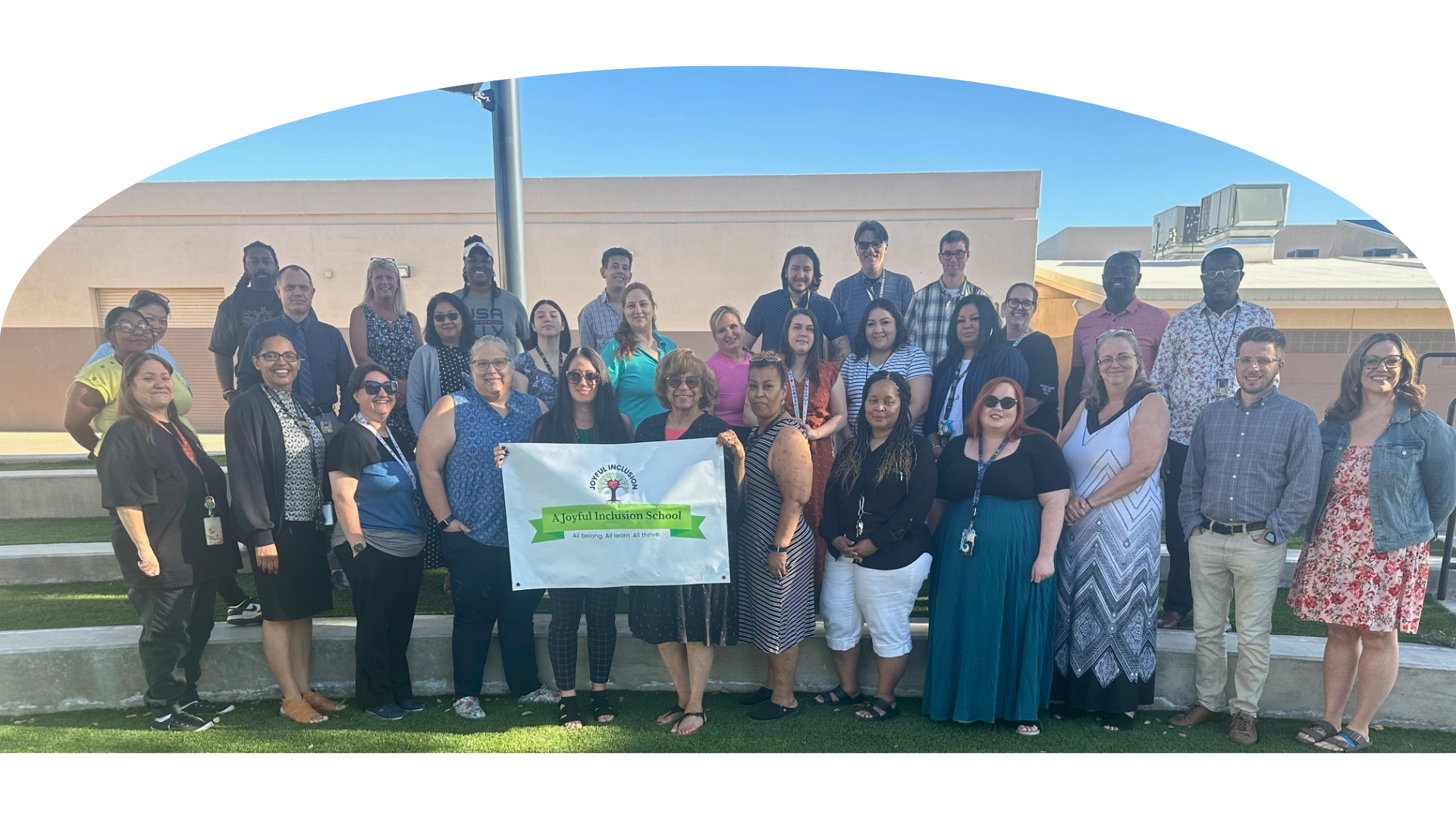
Planning meetings became brainstorming sessions instead of complaint sessions. Special educators became true partners.
There was more collaboration, more confidence - and yes, more joy (and laughter).
Watching that progress end because of shifting policies felt like seeing a healthy garden pulled up by the roots.
Children lose when politics becomes louder than progress.
Schools don’t change because policies change. They change because people do.
For the first time in many years, I wondered whether it was time to step away.
Sometimes disappointment whispers more convincingly than hope.
I almost chose retirement.
A sleepless night has a way of making difficult decisions feel obvious.
Driving to the Delaware Policy & Practice Institute in late June, retirement seemed like the sensible choice.
I was tired. I had spent decades doing this work. Maybe… it was enough.
Then, the day took a turn I never expected.
Sometimes all it takes is being in a room full of people who still believe change is possible.
Hope is contagious.
I presented with Casey Montigney, an instructional coach I’ve been fortunate to work alongside for years. Together we led a session called Systems that Create Joyful Connection to Retain and Empower Educators and Students.
As we shared practical frameworks and invited school leaders into the conversation, the room came alive.
People weren’t asking whether schools could improve.
They were asking how.
Ideas bounced across each table. Leaders challenged one another, built on each other’s thinking, and imagined possibilities instead of limitations.
Casey’s energy was contagious. So was the optimism in the room.
I realized something that surprised me:
I don’t want to watch the future of education from the sidelines. I want to help shape it.
If the lessons I’ve learned can help educators avoid a few mistakes, save time, and create more joyful schools, then I still have work worth doing.
Experience matters most when it’s shared.
Then I discovered a new lens.
Later that day, I listened to keynote speaker Dr. Rick Miller, founder of Kids at Hope.
He introduced us to Hope Theory - a concept I couldn’t believe I’d never explored before.
The ideas stayed with me long after I returned home.
Every time I read about another teacher leaving the profession, my heart sinks. Most didn’t begin their careers exhausted. They began full of hope. Somewhere along the way, that hope faded.
That’s when I realized something important.
Burnout doesn’t always begin with exhaustion.
It often begins with the loss of hope.
Hopelessness is quiet. It settles into schools one discouraged conversation at a time… until people stop believing tomorrow can be better than today.
Hope works the opposite way.
It spreads. It grows. It reminds people that they still have the power to change lives.
That realization gave me a new mission.
I immersed myself in the research of the Science of Hope and began creating the Joyful Inclusion Hope Framework, embedding it in a series of mini-courses designed to help educators rediscover the purpose that brought them into teaching in the first place.
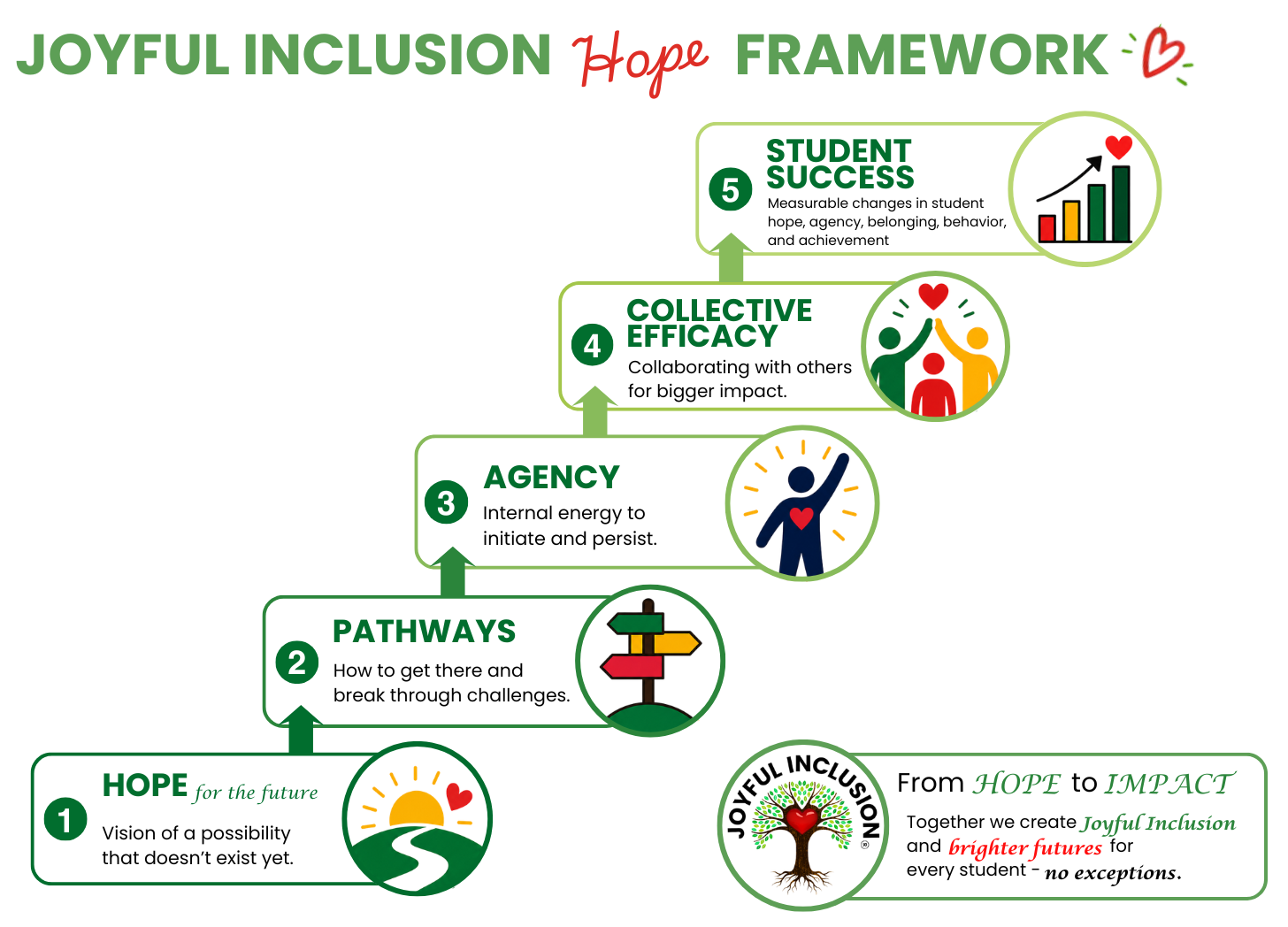
Instead of feeling drained, I felt energized. I felt hopeful.
Instead of thinking about retirement, I found myself thinking about what’s next.
So, is it time to retire?
For me, the answer is no.
Not because I have something left to prove - because I still have something left to give.
I may move a little slower than I did fifty years ago. I’ll probably say no to more things than I once did.
But I won’t say no to work that still fills me with purpose.
So bring on my 80th year.
I have a feeling it may be my most meaningful one yet.
I’d love to ask you the same question I asked myself:
When have you thought about walking away - only to discover a new reason to stay?