The Teacher Shortage is an Ecosystem Problem
Last week, I joined a webinar led by Dr. Andrea Terrero Gabbadon. She referenced Demoralized: Why Teachers Leave the Profession They Love and How They Can Stay by Doris Santoro - a book I immediately pulled off my shelf to revisit.
One line stopped me:
“Teacher retention issues can’t be fixed with a checklist of action steps. It’s an ecosystem problem.”
That sentence didn’t just resonate for me. It reframed everything.
What do I know about Ecosystems?
In 1978, soon after the first special education law passed, I was teaching a self-contained middle school special education class. My students had each been labeled “unsuccessful” in general education and as needing to be taught “in” special education. (We didn’t understand then about the damage caused by segregation and the value of inclusion.)
I started the year with five students. By June, I had eighteen.
Each one carried not only unique learning needs, but a story: often shaped by frustration, failure, and a quiet belief that school wasn’t built for them.
I was responsible for teaching five subjects a day. I was certified in English, reading, and special education - what did I know about teaching science, social studies, or math? So, I leaned on my colleagues.
One of them, Doug, the science teacher in my carpool, changed everything.
On Fridays we swapped classrooms so my students could use his lab. Somewhere along the way, he taught me about ecosystems. I turned his ideas into visuals for my students. Then, something beautiful happened.
He started using my visuals with his classes.
That was my first real lesson in interdependence.
The Ecosystem Lens
Here’s what Doug’s lessons on ecosystems taught me - and what schools often forget:
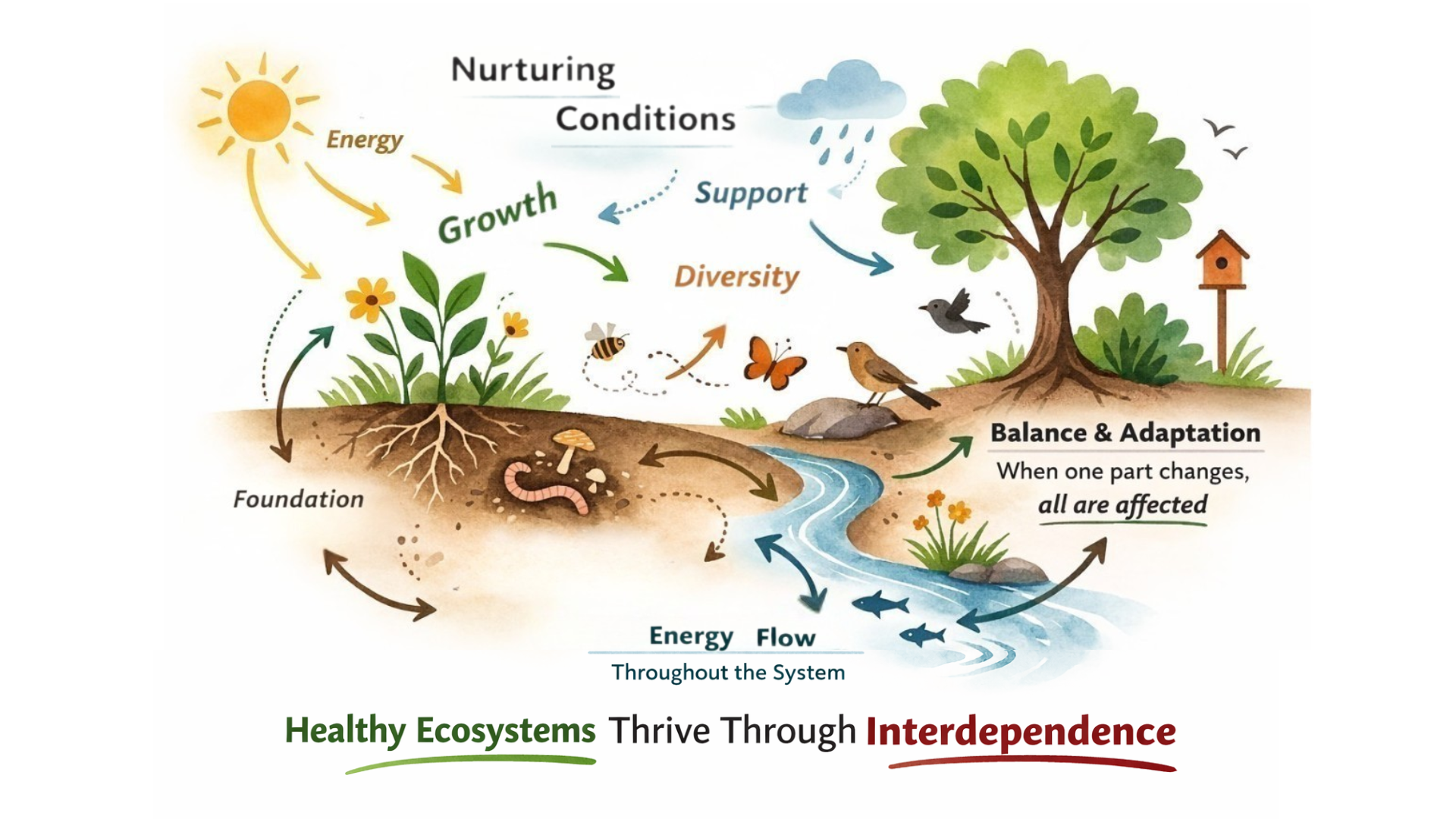
Interdependence: Nothing thrives alone. Every part affects and is affected by others.
Nurturing Conditions: Climate matters: emotional, physical, and cultural for all organisms.
Energy Flow: Healthy systems move energy, ideas, and support freely, not just in one instance, one classroom, but continuous over time across the whole environment.
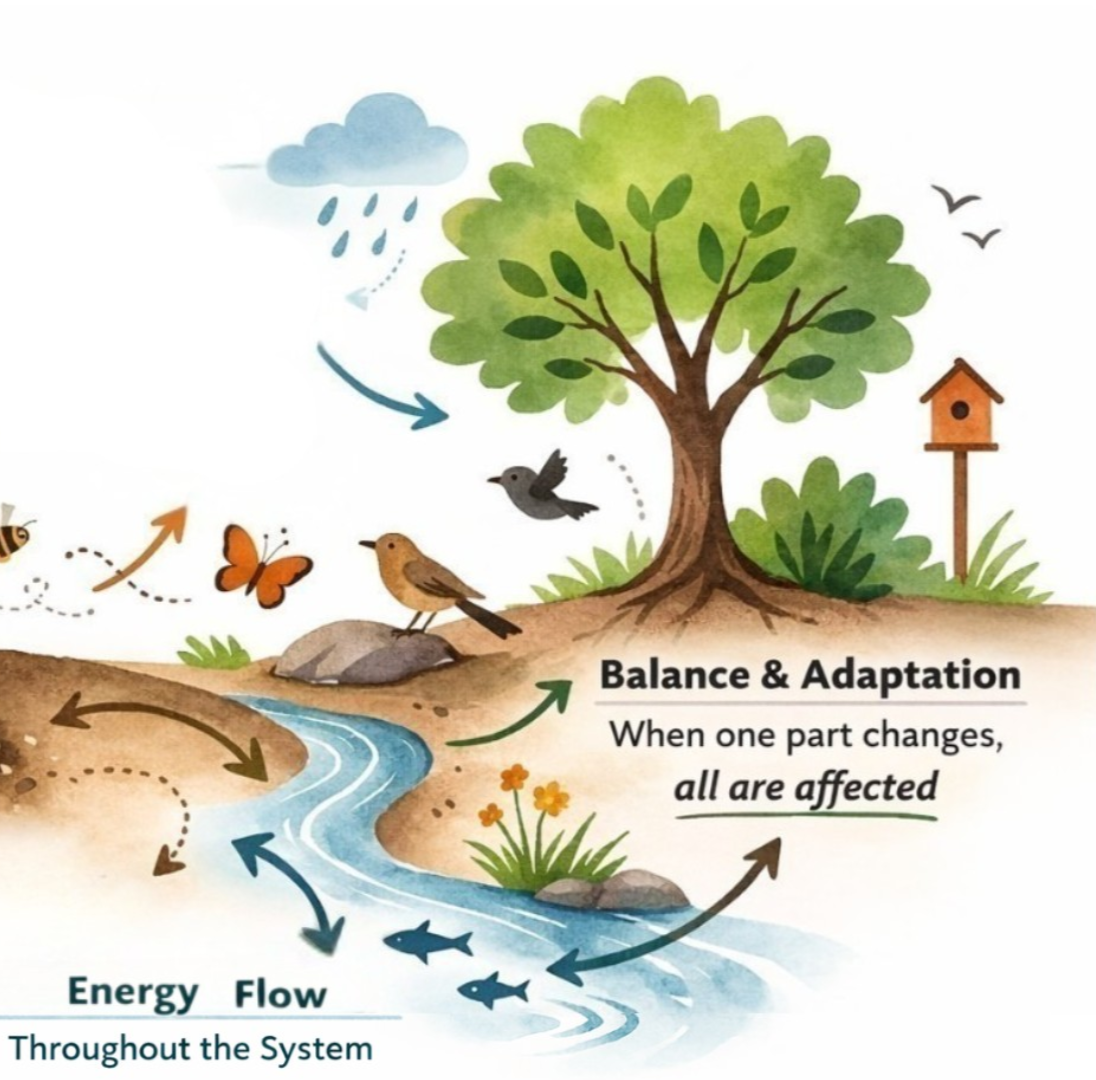
Balance and Adaptation: Healthy ecosystems adjust when conditions change.
Diversity: Variety strengthens resilience. Sameness weakens it.
When ecosystems are healthy, the organisms within them thrive.
When they’re not, even the strongest struggle to survive.
The Educational Ecosystem
What made teaching feel so alive back then?
I was exhausted most days. But I also felt purposeful. Supported. Appreciated.
I was living my purpose - to be “that teacher” that changed the lives of students. AND I wasn’t working in isolation.
I was part of something alive. And that made all the difference.
So how does this apply to education - especially special education?
Let’s look honestly at our schools.
Today, we talk about a “teacher shortage.” But, when you listen closely - especially to special educators - you hear something deeper.
“This isn’t what I signed up for.”
They’re not leaving students. They’re leaving systems where:
Collaboration is expected, but never structured.
Inclusion is mandated, but never defined.
Responsibility is shared in theory, but not in practice.
Meetings are frequent, but clarity is rare.
In ecosystem terms? There’s no oxygen.
We need to be asking the questions that matter.
If we want teachers to stay - and, more importantly, to thrive - we have to stop asking surface-level questions and start examining the ecosystem itself.
🌱Do we have a shared vision of what effective inclusion looks like in practice, not just on paper?
🌱Is collaboration protected, structured, and expected - or left to chance and goodwill?
🌱Are teachers growing through coaching and support, or surviving through trial and error?
🌱How does energy flow through the system - do people feel energized and empowered? Or do they feel drained, siloed, and alone?
Because here’s the truth: You don’t fix an ecosystem by telling one organism to try harder.
What if every stakeholder - leaders, educators, families, support staff - took responsibility for strengthening just one part of the ecosystem?
Not a checklist.
A contribution. A shift. A commitment to building connections where people - students - can actually flourish.
Because when the ecosystem is right… Retention isn’t the goal anymore.
It’s the natural result.