Backstage at Joyful Inclusion
Curious about the WHO behind Joyful Inclusion?
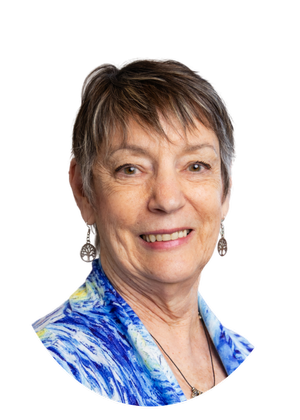
Join Amy & Meg in our first Video Podcast. We came together to reminisce about our past, share our vision and inform you about where we want to go.
-
Hi, I'm Amy Pleet-Odle and…?
I'm Meg Knapp
And we are here to give you a little background on Joyful Inclusion. But first, Meg, you're the organizer. Did you have a plan for how we shouldhave this conversation?
Well, I think first we should maybe introduce ourselves a little, give a little background, and then let's talk about Joyful Inclusion and where we started and where we're going.
I like that. Okay. So, I'd go first.
Yeah.
Okay. So, I have been an educator for 57 years. I have loved this profession and it breaks my heart that people are leaving it, that they don't find the satisfaction that they came for. And I'm I'm going to keep going till we figure it out.I started as an English teacher, and my favorite were the kids in the back of the room that weren't learning like everybody else. That was before there was a special ed law. So, I didn't have any research or guidance or labels to help me figure out what to do with them. But that's where my heart went.
When the special ed law was passed, I became a special educator. I gained the skills and knowledge to work with them. And that was my favorite thing, working with the kids that struggled and watching them come alive, watching them be successful, watching them thrive.
Then I became a transition coordinator placing kids out on jobs and I realized, wow, we never taught them to advocate for themselves. All those years I'd been helping them, but I'd never taught them to advocate for themselves.
So that became a new campaign. Then got my doctorate, became a special ed professor, managed a special ed graduate program, and my favorite thing was, “how do I help the teachers who have the heart like I do, that they want to make a difference?” And every one of those teachers, I interviewed them.
“Why do you want to be a special ed teacher?” They all had a dream. They all had “my little brother…” or “there was this kid at school…” or “when I went to a summer camp, there was…” and they talked about how making a difference in the lives of the kids that struggled was what brought them alive. And I thought, I got to help them. And so the whole program was about giving them the skills so that they could go out and be the teacher that they wanted to be that I just loved.
Then I retired from that university, went to another, and I was the state inclusion specialist. And I'm out in schools thinking, "These teachers have this dream, they have the skills, and it's not working." And the principals and the district leaders said, "How do we help them? How do we set up our system so it works?" And I realized I was focusing on the students, then on the teachers. Now I have to work on the whole system and the leaders.
And when I retired from there, I decided I'd maybe do a few more workshops. And then there was more request, and I went, “Okay, what's this going to evolve into?” And that turned into Joyful Inclusion schools.
And it got to a point where it was growing. And I thought, “I don't know if I can do this by myself.” And I talked to my friend Cara and said, "I'm thinking I might need to hire somebody to help me, but I don't know what that person would do." And she goes, "Oh, I know. I know exactly who you should talk to” - and I met you. So, pick it up. Why did you start working with me and where did you come from?
Where did I come from? Well,I grew up in the 90s and didn't have any experience - so I thought - with anybody with disabilities, you know, "those kids"… I saw them for maybe five seconds in the lunchroom when they were being ushered out by their team, by their teachers, and I don't know where their classroom even was in my school at all.
You know, that continued through middle school. I don't even remember seeing any of "those kids" anywhere at that point. And so I just I had no experience with inclusion, with disabilities, until many years later - my daughter was diagnosed as autistic and I was just so surprised, and didn't know what to do and went through many years of struggling.
I didn't feel like I was part of her team. I didn't feel like I had a seat at the table and I slowly learned that I did and learned how to work with them and that's actually how I met Cara - Cara was working um on a citizens advisory committee for special education in my county, and she connected us.
And you know that initial conversation, that interview that we had - you've been a stakeholder in so many ways you know as a teacher, as a parent, yourself, working in all these different ways and I could just tell that we really were singing the same song of no one should feel how I felt at that table.
I know you felt it, too, and you know our students shouldn't see those kids for five seconds being shooed away. So I just really, you know, resonated with your vision of what Joyful Inclusion could be.
It's so interesting what you're saying about a seat at the table because there might be a chair, but we're talking about more than having a chair at the table. We're talking about having a voice and having people listen and honor your perspectives, not being blamed. The number of times as a parent that I got a phone call, “Oh, your son's not getting along with people. Will you talk to him tonight?” Like, "Sure, I'll talk to him tonight and everything will be cured by tomorrow. His Autism diagnosis will be solved by my conversation tonight." And I think these were well-meaning teachers, like they didn't know what to do, and they hoped I could fix it.
But if it were that easy, I would have fixed it a long time ago. So, there was this blame conversation. There was a guarding because parents can bring lawsuits and, so, we want to be careful what we say and what we don't say.
And being a parent at the table and being a professional at the table, two very different experiences. So when I met you and I saw you were bringing the parent perspective, I went, "Yeah, this is great. This is something that we need to because I've been putting my parent perspectives aside when I was working with Joyful Inclusion and you helped me bring them out to the fore."
But you also brought a truckload of experiences that you had being an office manager and handling behind the scenes. So, what a great partnership we have been. And it's been five years.
Uh, I think this fall it'll be six.
Time flies when you're having fun and we've come a long way.
We really have.
In the beginning we were developing online courses so that schools could have a a
three to five year sequence of of going through the courses and then we started with the idea - I remember getting on the call with you and saying, “I'm thinking about bringing on some coaches to go out into the schools because I can't go - as we were expanding in other states I can't go to all these I can't remember all these teachers names I can't remember all the situations and build the relationships. What if we had some coaches?”
And we thought about it and we brought on three, four that first year.
I think it was four.
We got up to I don't know. It's like the team has grown. And then you helped us organize retreats every summer for four days where we'd get together and you managed all the behind-the-scenes magic so that we could sit down and brainstorm together.
And how much talk about having a seat at the table that's respected. We have folks who are who teach in higher ed, people with experience teaching. What
else? They have, they -
Several of them are school administrators. We have district leaders, parents, you know, we really brought all of these different stakeholders and lenses to the table through our team.
And that enriched what we had to offer, because their perspectives helped us flesh things out.
And then two years ago, everything changed politically, economically, teachers are leaving like crazy. School districts are just confused. Leaders don't know what direction to go and a lot of them don't have the budget to do a three to five year commitment.
So now we're pivoting and we're moving in a new direction and we're developing some new tools. What are you most excited about what we're developing?
Well, as you said, we're pivoting and I'm really excited to see how the courses we've developed over the years will change um to meet the new needs that people are having.
And then I'm also really excited for our Strategic Compass and our Navigator app.
And you know, we actually we use the imagery of a journey quite a lot. You know,
compass, navigator... And we also use the imagery of an ecosystem. You know, our logo is the tree of life. And I think that's really interesting that we keep coming back to those themes. Why do you think those are so central for Joyful Inclusion?
We do keep coming back to that. It's - what an interesting question.
So people think that they could bring me in. I could do one workshop and everything will be fixed. But it's not a simple fix. It's not a checklist.
It's the whole ecosystem needs to shift. the attitudes. You talked about what it was like when you were growing up about those kids.
Yeah.
Those attitudes need to shift because what we've learned now from brain research about what kids can learn given the right kinds of instruction, the right environment, it's amazing. So that needs to be embedded, but there also needs to be embedded support for teachers.
If teachers keep having more and more things laid on top of them without things taken away, the purpose that they came for, like, “I'm here to make a difference in the lives of kids and I'm being asked to do this, this, this, this, this, and I never get to what it is I came to do.”
And then teachers go, “This isn't what I came for. I'm leaving.” And it's it's it's a crisis.
It really is.
So to shift the environment, to shift the culture, to embed teachers with little strategies that when they try them, they find out they work. It works for their kids, it works for their own peace of mind, and then building collaboration.
So the journey is about taking one step and the Compass is a tool to help them figure out what's our first step, where do we need to go and what might be step number two, three, four down the road. Down the road, haha, so there we go.
We still have the road map idea, but um the Navigator app also offers people a road map of the steps they individually can take.
So, I'm excited about the things that are coming.
But for someone who's listening to us right now, whether they're a family member, a district leader, an educator, what's one small step that they could take today towards Joyful Inclusion?
Well, if they haven't subscribed to our Substack account, I recommend that. I will never charge for the Substack account. This is a place where they can get information and tools and perspective and that they can use to move forward with Joyful Inclusion, whatever their stakeholder is.
So, Substack, and then once you're signed up for Substack, you're going to see announcements of some of these coming attractions, including the new app.
So, stay tuned. We're going to do some more of these. Thank you. That was fun.
Yes, it was.
If you found this valuable, subscribe to our Substack for free to receive new posts and support our work.