Why Special Ed Feels Almost Impossible
“We keep throwing money at special education and nothing’s changing.”
You can hear the exhaustion in a sentence like that.
Not anger. Not blame. Exhaustion.
A Superintendent said this to me after my presentation at the National School Boards Conference last month, and I haven’t stopped thinking about it since.
Because, from his seat, the frustration makes perfect sense.
Districts spend millions on professional learning. Teachers sit through workshops after already carrying impossible workloads. New software platforms promise better IEPs, cleaner data, tighter compliance, smoother communication.
And still, families fight for services.
Still, teachers burn out.
Still, students fall through cracks no spreadsheet can measure.
Still, leaders feel stuck.
In 2018 alone, U.S. school districts spent $146.5 million on special education mediation, due process, and litigation. That number is most certainly higher now.
Meanwhile, something uncomfortable sits quietly in the corner of every conference room:
More spending does not automatically create better systems.
And that truth hurts.
Most educators are trying incredibly hard. They care deeply. They work long hours. But, effort alone cannot fix beliefs that were built into the system decades ago.
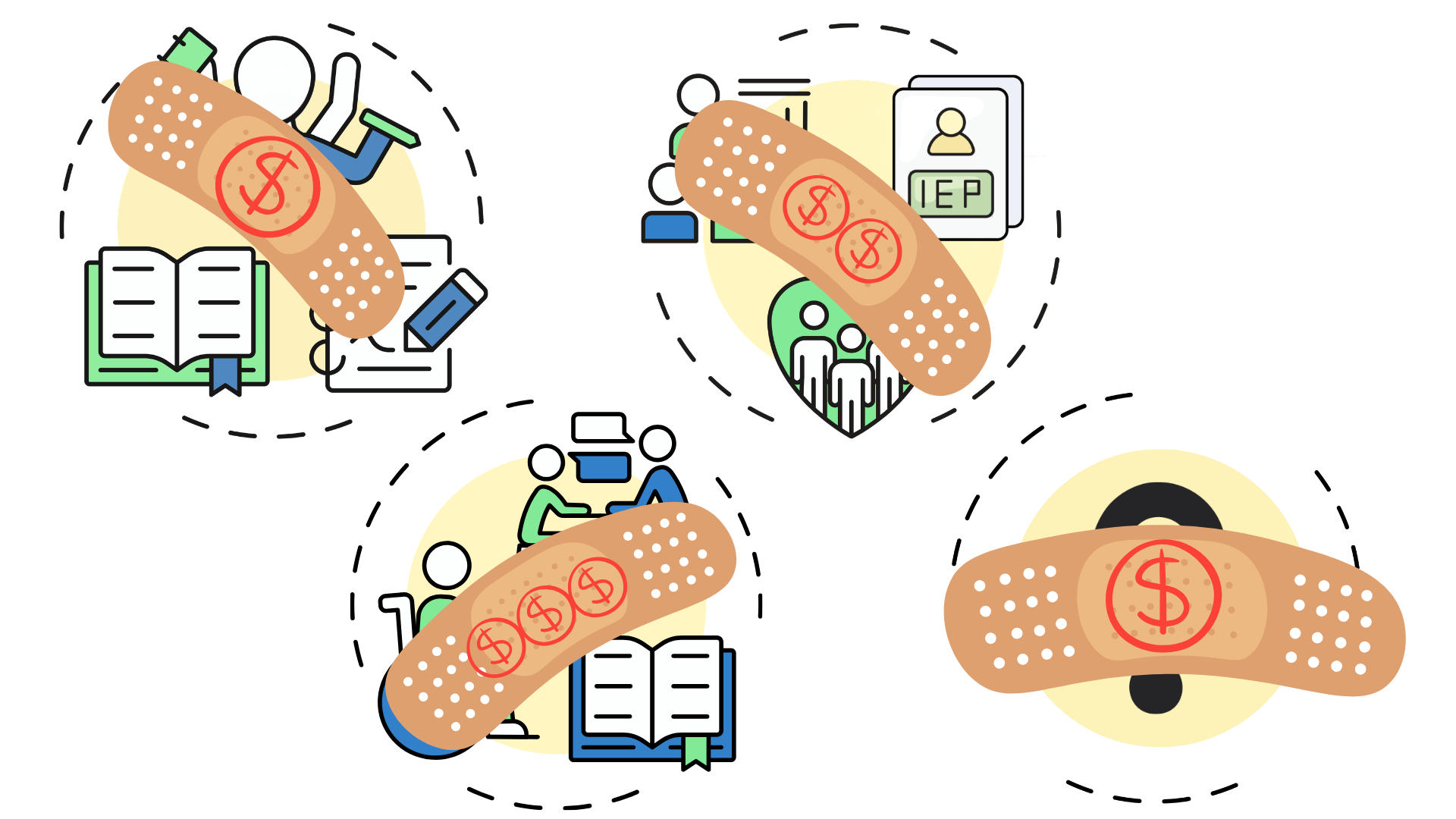
Without work on those beliefs, every new initiative becomes another expensive bandage.
The research has never been stronger.
Here’s the strange part. We actually know more now than ever before about how brains learn.
We understand far more about how vocabulary and information become useable knowledge. We know vastly more about neurodiverse thinkers, cognitive processing, executive functioning, and evidence-based instructional practices. We have federally funded databases packed with high-leverage practices, online tutorials, implementation guides, and toolkits that are freely available to schools.
The information exists. But information along doesn’t change systems.
A district can buy the best reading intervention in the country and still fail students if educators quietly believe some children are incapable of grade-level thinking.
A school can train staff on inclusive strategies while still organizing schedules, staffing, and expectations around separation.
That’s the part nobody likes to say out loud.
Sometimes the biggest barrier is not a lack of resources.
It’s a lack of belief.
Most systems aren’t resisting improvements because people are lazy or uncaring. They’re resisting because deeply rooted beliefs are invisible to the people holding them. The most dangerous myths are the ones that sound reasonable.
I spent 30 years trying to close the gap between research and reality.
For the last three decades of my career, I immersed myself in improving special education systems.
As a state Transition Specialist, I collaborated with school systems, adult service providers, and employers to embed relevant workplace skills (time management, task completion, self-monitoring, and advocacy skills) into educational experiences of students with disabilities.
As a university Special Education Graduate Director, I taught teacher candidates promising practices and foundational research. I supervised field experiences and stayed current through conferences, webinars, and conversations with experts across the field.
But, eventually, I realized something important.
Knowledge alone rarely creates lasting change.
So, I partnered with school and district leaders across four states to design Joyful Inclusion® professional learning tailored to their unique situations. We built learning experiences around real classrooms, real leadership teams, and real implementation struggles.
Then, our work grew.
We expanded our team, including six IFC Inclusion Coaches, each bringing different expertise and lived experiences. Their perspectives sharpened our thinking and expanded our ability to support educators on-site.
At our annual retreats, we wrestled with hard questions:
“How will we measure impact?”
“What conditions are needed to empower irreversible change?”
“What keeps schools from sustaining momentum once training ends?”
Those conversations changed me.
I remember one discussion where the room went completely quiet after a Coach said, “We keep trying to improve practices without first addressing beliefs.”
Nobody argued. Because everyone in the room had seen it happen.
❌ A district adopts inclusion language… but still schedules students with disabilities
into isolated experiences.
❌ A teacher attends training on accommodations… but still quietly lowers
expectations afterwards.
❌ A leadership team talks about equity… while protecting systems that were never
designed for belonging in the first place.
The tension is exhausting.
And yet, it explains why so many educators feel like they’re running hard without moving far.
Most systems don’t fail from lack of effort.
They fail from misaligned assumptions.
The hardest barriers are the ones we can’t see.
Last month, when I heard the Superintendent’s comment, I realized it was time to tackle the bigger question directly:
Why is special education improvement so hard?
I think it boils down to this: We keep trying to improve special education without questioning the beliefs holding the system together. Many of our beliefs about disability, special education, and change were inherited long before they were examined. And some of those beliefs simply are NOT TRUE. That’s what makes this so difficult.
The myths don’t arrive looking dangerous. They arrive dressed like “common sense.” They sit in policy meetings. They shape staffing decisions. They whisper low expectations into classrooms. They convince good people to protect outdated systems because, “that’s how we’ve always done it.”
Bad assumptions can survive for decades when everyone mistakes familiarity for truth.
And once those assumptions become embedded in schedules, staffing patters, and school culture? - change feels painfully slow.
Not impossible. But slow.
The schools making real progress are not necessarily the ones with the biggest budgets. They’re the ones willing to challenge what they’ve always believed.
This conversation is too important to avoid anymore.
So, here’s my big announcement:
I’m launching a video podcast series:
In each episode, I’ll unpack one myth using research, stories, and practical examples from the field. Most sessions will include guests with deep expertise, so listeners won’t have to rely on my perspective alone. Because this conversation is bigger than one person.
And honestly, after more than 50 years in this profession, this feels like the right time to say the quiet parts out loud. The stakes are too high for polite avoidance.
Too many educators feel defeated.
Too many families feel unheard.
Too many students are still waiting for systems to truly see them.
If we want meaningful change, we have to stop treating symptoms and start confronting assumptions. That’s where real transformation begins.
Most systems keep rearranging the furniture.
The brave ones rebuild the foundation.
Subscribe to the Joyful Inclusion Substack to be sure our posts and episodes will be delivered to your inbox each Tuesday.