Three Components of Change
Does the Order Make a Difference?
Every school has an improvement plan, but let’s get real - humans resist change. We all hold on to ways of operating even when we may not be getting the results we want. How many people persist with “bad habits” in spite of best intentions?
As an Inclusion Catalyst, I think about the change process a LOT. School leaders come to me wanting to transform the effectiveness of their instructional practices without putting their faculty through stressful change. We strategize about the best approach for their school. It turns out the sequence matters!
After 25 years in the special education systems-change business, I’ve developed a framework that helps me tailor our initiatives to the school’s unique situation so they can achieve the results they want. My example is from special education since that’s my thing, but this framework and our handout at the end could be used anytime you embark on systemic change.
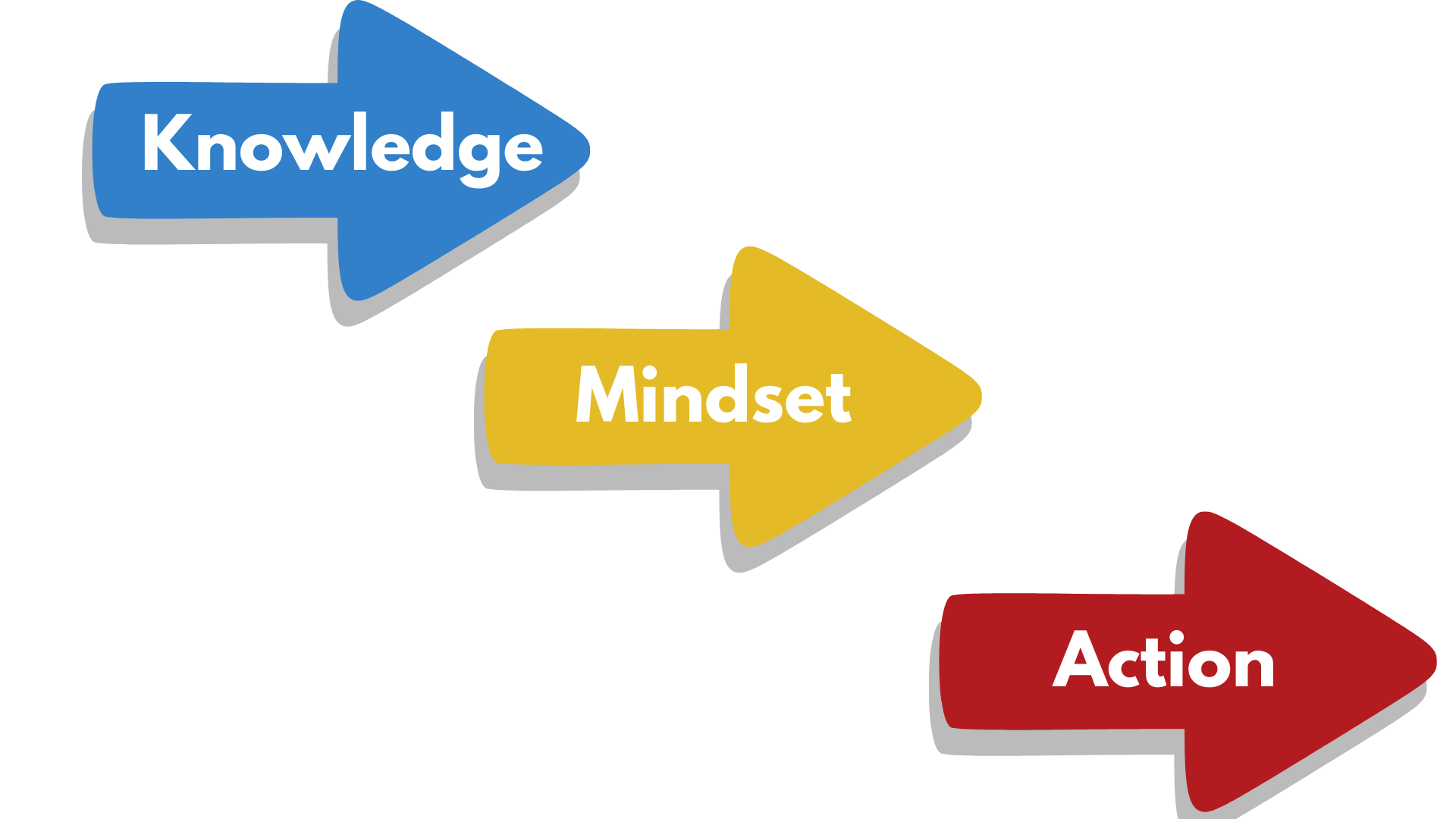
As you look from where you are now to where you want to be, ask 3 questions:
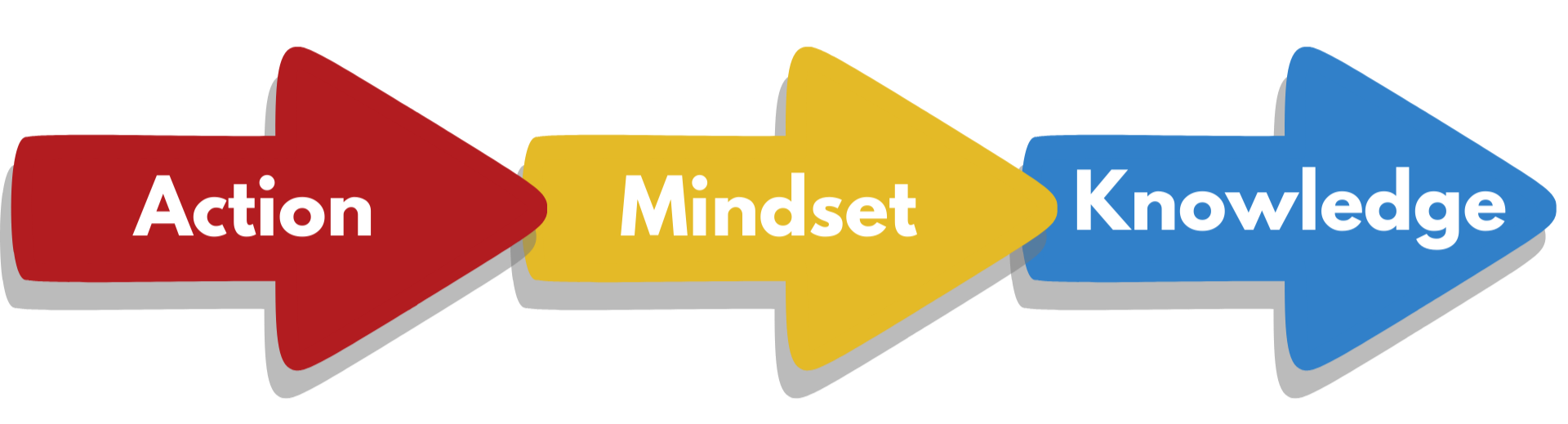
1. Knowledge - What will we need to know to be effective?
2. Mindset - How will we need to think to be effective?
3. Actions - What will we need to be able to do to be effective?
I used to think there was a predictable sequence for these three components. That you always begin with knowledge.
But experience has taught me that it depends.
How about an example: Let’s say I’ve agreed to lead a professional workshop with a school faculty related to collaboration - specifically, what to do with that second adult (a special educator or specialist) who hangs around in the back of the room? That’s called co-teaching if the second adult is scheduled to be there consistently. If the second adult pushes in occasionally, we call it collaborative teaching. Either way, I’d start with one collaborative strategy: direct instruction scaffolding.
Let’s explore three different approaches.
Option 1: Begin with Knowledge
I begin the workshop with key vocabulary and a handout with steps for implementing practical strategies. I share a relevant scenario for discussion:
Mrs. A (5th grade teacher) and Ms. B (special educator) are scheduled to co-teach a class of diverse learners. They want to teach the process for writing a five sentence paragraph with a topic sentence, three examples, and a summary sentence. Mrs. A introduces the process with an example and explains the structure. This is the direction instruction portion of the lesson before students begin their practice.
What does the special educator do? Or rather NOT do? (I invite responses.)
Not sit in the back and take notes. Ms. B’s not one of the students!
Not float around the room signaling behavior control. Engaged students don’t need behavior control!
Not whisper to “her students” to supplement instruction. That’s distracting for everyone.
Then, if I’m beginning with knowledge in my workshop, I distribute a handout of strategies Ms. B can use. I explain how direct instruction scaffolding is perfect for the introductory part of the lesson - the “I do” part of “I do-we do-you do.” We consider contributions the second teacher could make. She asks a clarifying question or restates the key principles or invites student engagement.
Knowledge can be an important beginning, but too often professional development workshops simply distribute knowledge with no plan to take it from there. These are sometimes called “sit and get” workshops. I’ve led them and, believe me, they have little or no impact if you stop there. Teachers take that handout and add it to the growing pile on their desk.
Option 2: Begin with Mindset
First, I explore what these teachers are thinking by asking, “How useful is the special educator during the ‘I do’ part of your lessons?” Maybe I’ve already visited classrooms and I’ve seen the special educator standing in the back. Or I’ve heard from the special educators that they feel like second class citizens.
Over the last fifteen years of listening to teachers, I find Carol Dweck’s framework helpful. I find it useful to categorize teacher thinking into two camps - growth or fixed mindset - related to the role of a second adult during instruction.
Teachers with a growth mindset enjoy the challenge of learning something new. They don’t judge themselves for not knowing how the special educator could contribute. They ask probing questions, make eye contact, and lean forward in their seats. They speculate about what two teachers could do during direct instruction.
Teachers with a fixed mindset are resistant to making changes. It may show up as limited faith in their students’ ability (so why bother?) or camouflaged concern about their own ability to learn something new. They want to stick with current methods that are predictable, even if some students are left out, avoiding the disruption of student responses to change. These teachers look disengaged, make limited eye contact, or have their arms crossed.
If I sense the majority has a fixed mindset about our topic (great to know ahead of time), I would begin with a discussion of the problem, encouraging them to ponder the students who are less successful with current direct instruction methods. I invite those with a growth mindset to share ideas for a better approach. I may invite the principal to share school data or other reasons why this topic was chosen, as well as their expectations for teachers to implement direct instruction scaffolding.
Then I intentionally create a safe space for those with a fixed mindset to take a risk.
What if there was something two teachers could do that would increase engagement of those struggling students? What if sharing the load could make their jobs easier? What if Ms. B led part of the lesson while Mrs. A added the scaffolding?
I watch for a shift in body language and participation before I move into the knowledge and action part of our agenda.
Option 3: Begin with Action
Sometimes, as they say, the proof is in the pudding. If I’ve learned ahead of time that this is a “tough” crowd or I can see by the body language that they are not going to be convinced. I get them into action right away.
I explain that there are some new findings from brain research that I want to share. Then I pull out my notes on how the brain learns - dense information about attention span, frontal lobe, and synapse connections. On purpose, I deliver it rapidly without any visuals or handouts. I stand in one spot (behind a podium if possible) and try to be as boring as possible. It doesn’t take long before I see most of them glaze over - usually less than 10 minutes.
Then I ask if they’re ready to take a quiz. Most of them are horrified.
Then I move to a different spot in the room to signal that I’m NOT there as a lecturer. I ask teachers how they felt during my lecture, inviting them to share how hard it was to pay attention. I ask if it’s possible any of their students feel that way when they explain information in class.
I invite someone to be my co-teacher. This is usually someone I already know or someone I’ve spotted ahead of time who would be willing to play along.
I start explaining the information again - with expression this time. I stop after the first chunk and invite my co-teacher to ask a question. I welcome the whole group's suggestions of questions to be asked. We consider who should answer (me, volunteers, or in pairs). We talk about the value of that question or other possible questions for learners who have tuned out.
If I think they’re ready to go deeper, I present the next chunk of information, pausing as my second person adds or asks something. I mention that according to research, that second voice is a wake-up call to the brains of those listening. I invite them to invent other options for the second person, and they usually suggest writing key terms on the board, drawing a diagram, inviting every pupil responses, etc.
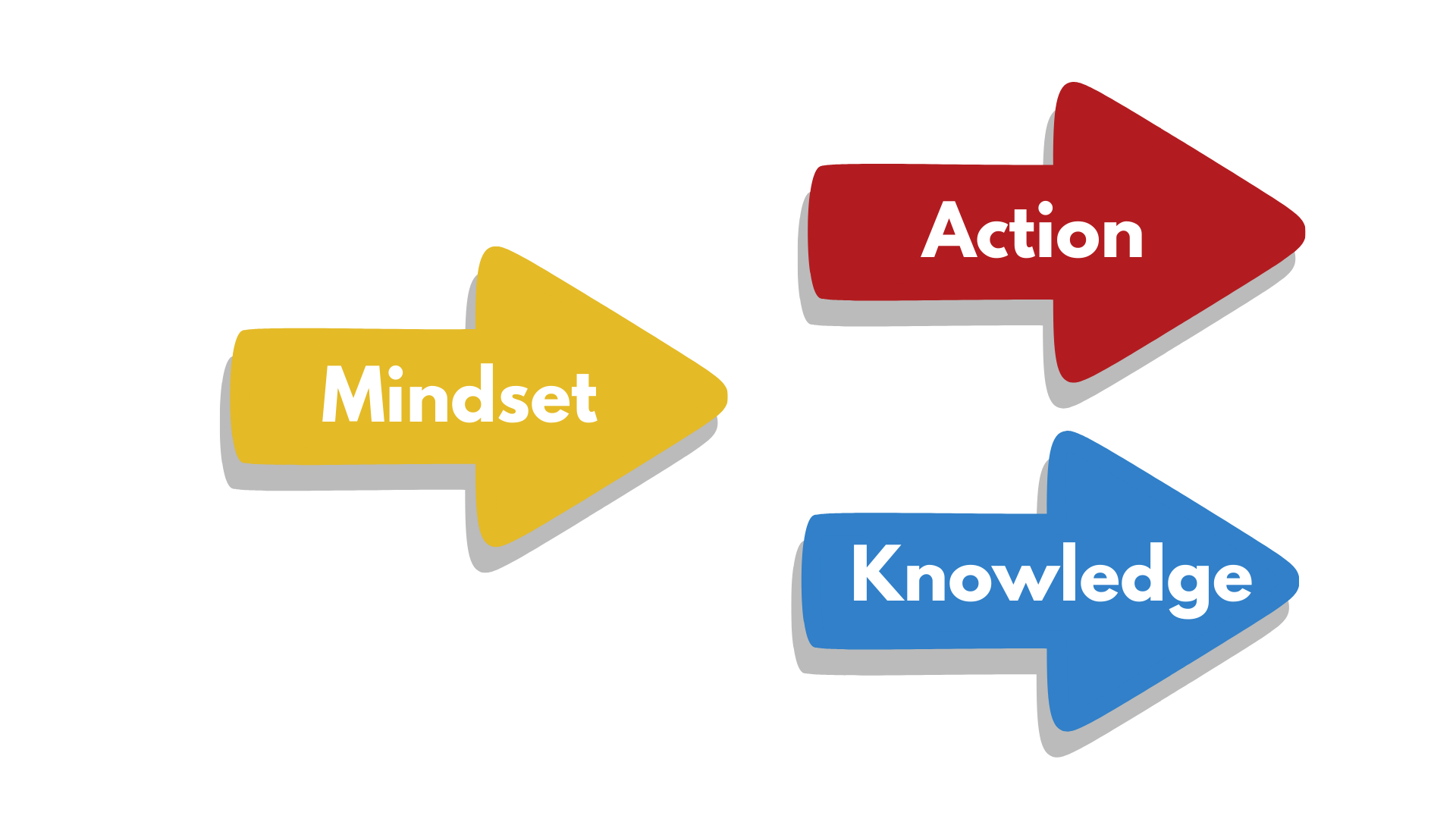
By now, they have experienced the value of using the second person to scaffold instruction. Through action, they often shift their mindset. They’re now ready for the handout (knowledge) on scaffolding strategies.
The order matters.
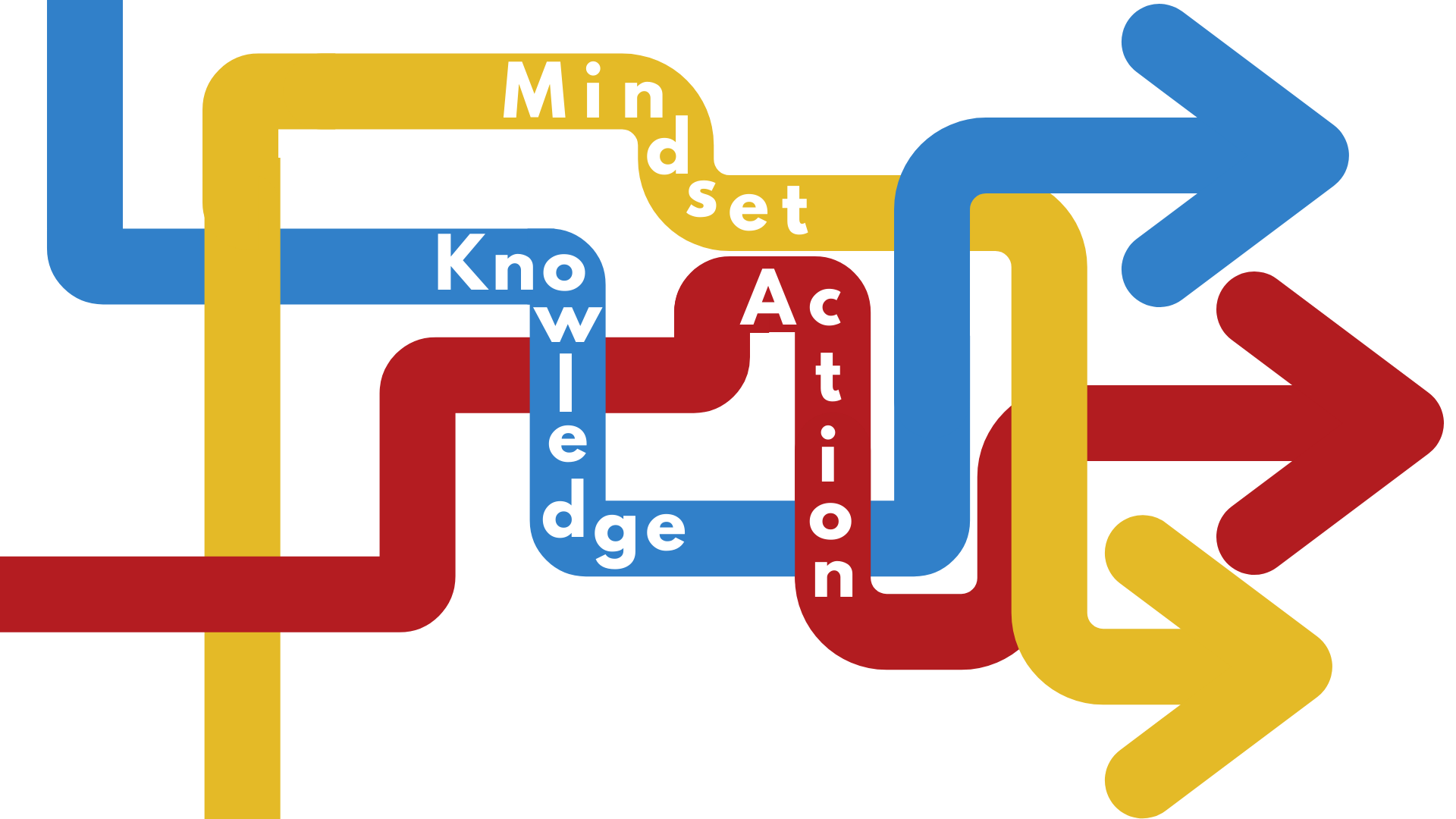
Bottom line - what’s the best sequence to use with professional learning? Should we start with knowledge, with action, or with mindset? It depends.
Here’s where it’s important to know your audience.
I’ve created a handy tool - 5 Guiding Questions to Determine the Sequence of Your Professional Development - for planning the sequence of your professional learning with intentionality. I hope you’ll share your thoughts so that we can all become more effective.