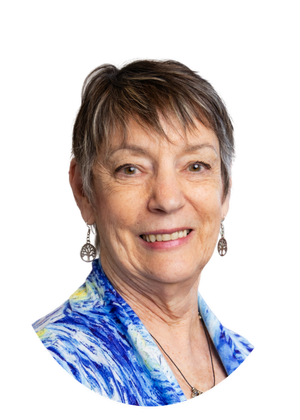
Our second broadcast in the 10 Myths that Block Special Education Improvement Series
In this session, I chat with Debbie Tannenbaum, Elementary Technology Specialist in Fairfax County Public Schools about her tech project with the district autism program. Rather than coming in all prepared with her expertise (and she’s got a lot of it), she listened and learned.
She invited the teachers to describe the challenges they faced with teaching students on the autism spectrum across 6 grades in multiple content areas. Some students were on the standard curriculum; some on alternate. Most had behavior intervention plans. Teachers described a juggling act, managing all the planning & data.
She described the valuable contributions from district special education specialists and how they all learned from each other. Worth a listen!
Bottom line: you should see red flags when a consultant thinks a solution that worked in one place can be imposed in another place. Professional learning may use some common frameworks and tools, but it needs to be tailored to each school situation.
There is no universal blueprint for improvement!!
-
Welcome to the 10 Myths Blocking Special Education Improvement. This is episode number two in that series.
Myth number Nine, The One Size Fits All Myth.
Often district leaders and consultants and coaches think that just because an approach worked in one place or an approach or a toolkit worked in one place with one population that they could bring it into another place and it would still work.
And I have - I was already scheduled to talk with our guest before I started the myth series and then I realized what we wanted to talk about was exactly Myth number Nine and so I'm really eager to introduce to you Debbie.
So, Debbie Tannenbaum, let me introduce you, and you are an elementary tech specialist in Fairfax County Public Schools, Virginia.
That's correct.
Tell us about your role.
Well, my role is one of those roles that looks a little bit different every day. Inherently, my goal is to really help teachers and students use technology to amplify learning, but it looks a little bit different every year.
This year, my principal really asked me to ground my work in UDL, universal design for learning. And she uses me almost like a universal design for learning coach. And so - we are an inclusion school - and so,I provide co-teaching and modeling to the teachers in my school. If their classrooms are part of our inclusion pilot, I'm in there about once a week.
And then the other classrooms I'm in about twice a month, once a month, depending on schedules. But I go in and I model more inclusive practices with technology, but also just ways to make sure we're better meeting the needs of our students.
And in addition to that, I do do some fourth grade technology classes. And I've gotten a chance to, you know, do some professional development for my teachers. And one of those things is the thing we're going to talk about today that I'm most excited about from this year.
Yeah. So, I want our listeners to know all about this project that you did with the enhanced autism program and what was the problem that you were brought in to solve?
Well, we ended up it actually started with a with funding and trying to figure out the best use for funding, which is ironic because usually in education nowadays funding isn't where we start. But our school district had provided our school with 24 days of subfunding and it had to be something related to innovation, digital learning, digital, you know, using digital resources to improve learning, enhance learning, demonstrate learning. And so my principal and I sat down and we were talking about it and she was like, “I'd really like you to do something with our enhanced autism teachers.”
Now, I'm going to be perfectly honest. Before this, our five enhanced autism teachers were the people I saw running around kids in the hall. Last year, I had a chance to do a tech class inside of an enhanced autism class, but I didn't really know what I was doing. I'm - although I have three out of my four kids are have IEPs - I can't say that I'm especially versed in special ed beyond what, you know, helping them with IEPs.
And so when she said this, I have to admit at first I was a little, like, a little alarmed. But she as we started to talk, she said, "Well, it's not going to just be you." She says, "I have ideas of how this might be able to work, but I'm going to put you in touch with a team of people who are from our, you know, assistive technology. Our reading specialists will be involved in this. People who are involved in our special services and curriculum as far as the special ed side are going to be involved in this.”
And she, essentially, as we're sitting there sent an email to a team of people at the district, including me and the reading specialists at my school, and said, "Let's set up a meeting and talk." And then we also had our ABA coach as part of this. And so we sat down for this meeting to talk. And historically at my school, and I know we're not the only ones, the rigor in enhanced autism has been an issue. We want to make sure that our students aren't just being and being babysat, but that they're actually accessing as much of the regular curriculum as possible. And that has not been historically what's happened. And so we've tried incorporating our EAC teachers more in our CLT meetings to plan, but there's still a gap.
And part of that is because not, you know, all of our EAC teachers come from different places.
It's hard to get people to do this - that type of work right now. And so she's like, I want to do something to work with literacy. And so we all sat down to talk and our ABA coach is like, well, “What if we did something with morning meeting? Everybody has a morning meeting. What if we put more literacy in it?” And we started talking about this. And as we were talking about it, I was like, well, “I wonder if we could create a gem about this.” And so we started -
Wait let - tell people what a gem is in just in case.
So a gem is kind of like a specialized project inside of Gemini where you give it a lot of background knowledge and you give it a specific task to do.
Okay.
And so as we were working on this we were like this sounds like a great idea. And we, we decided we were going to figure out how to put it all together. Now there were like -
Wait a minute, let me - let me - I'm trying to wrap my head around this. So you had some money. The idea was that you were going to come in and do something with this group and you didn't know what. But it was a collaborative effort to start brainstorming where are the problems, where are the gaps?
Yeah.
Where could you bring your expertise and combine it with the expertise of the specialists of the district -
Absolutely -
That are doing it. So, what a fabulous design right there.
It was, I have to say, cuz I do a lot of professional learning where I design it on my own and this experience has been amazing. I've done sessions with one other person, but to be in a team of seven or eight people and every one of us bringing something unique to the room, our ABA coach taught me so much about how - what a morning meeting could be like. Um, I had been responsive classroom chain trained, but I didn't know I could incorporate all these things in.
I learned a lot about the reading curriculum by working with our reading specialists and the people from central office who were supporting that.And I learned a ton about assistive technology from our assistive technology folks. I had no idea how AAC devices worked, why they were important. I'm working on an article right now for an ISTE plus ASCD blog and the title of it, at least right now, unless they've changed it, is you know, “We Changed Them, They Changed Us.” Because as much as they got out of this experience, our five teachers, all of us were forever changed by this experience.
Let's pause for that. Like, let that sink in. We so often think, “Well, I'm the expert.” I mean, you're an expert. You've been doing this for years.
Mhm.
They they could have said come in and fix them - which is what happens with a lot of professional development and in -
Right.
They said let's see what we could design together and -
Absolutely.
Everybody - I love this story. I love this story.
And we had seven sessions and I'll be honest we had no idea like we planned every session after each session based on what the participants needed and honestly, like, part of me was like, "Oh, I'm going to plan it all at once." I couldn't do that. None of us could. We were sitting there and trying to figure out how to leverage each other's experience. And every session put a piece of the puzzle together. And we didn't know what the puzzle was going to look like until the end.
And I'm not really sure we're at the end because, to be perfectly honest, this has made me so much more aware of things I didn't know existed. And so, to me, this is the beginning of a new journey.
That's so cool. So tell me about - like how so it - I know it's not the end but you did have some kind of a conclusion that something created. So tell me about that.
So we ended up doing like I really feel like three phases in our journey. That first phase was that morning meeting where we really infused literacy into it. Then we spent some real time to develop access. We talked about things like how to use our AAC devices, how to incorporate descriptive teaching into literacy. I didn't know what that was. And what I thought it was wasn't what it was. We talked about that type of stuff in the middle of it. And then at the end, we went into a little bit of vibe coding and how we could design materials that met our students' needs where they were at.
And then we also talked about some technology tools that already existed that we could use to help better meet the needs of our kids. And for so many of our teachers, and I like I said, there were five teachers. We put them in one group of three and one group of two. So, we didn't pull them all out of their classrooms at the same time, but almost every teacher when we started this came in like, “I can't believe I have to do this. I can't believe I'm being pulled out of my classroom. I can't believe I have to write sub plans.”
And some of the things that the teachers said at the end as we started to wrap up, I mean, I was in tears. Because, you know you hope as a coach that you're going to make an impact on the teach- the people you serve. And I mean one of the teachers was just like, she's like, “I'm now able to, you know, use these tools to incorporate more student voice and choice. I don't feel like I'm searching for things that I can't find. I don't feel like I'm” - the biggest thing they said to me was they felt seen. And -
Yeah, I think a lot of special ed teachers feel like they're that second class citizen that's not quite - you're not an English teacher or a math teacher and you're not the great band teacher that everybody's raving about or this or whatever. You're like this - like you're down the hall out of sight or you're the person who goes in and out of classrooms and you're still - so to give the special ed teachers that much respect and learning from them and having them help guide the project is such a gift.
And in addition to that, it was really important for us to make sure that it wasn't just a one and one. So many times we do PD and it's one and done.
We started this in January and we ended at the end of April. So there was time in between and I said to the teachers at the end of this, “This is not the end. Next year - because obviously right now I'm busy in testing - I want to be in your classrooms.” Two of them had already invited me into their classrooms the first time. I've been here for four years and I got invited into two EAC classrooms and it was amazing. This is just the beginning.
And I told my principal, I've said to her, I was like, "Sometimes you ask me to do something and I go in kicking and screaming, but somehow you manage to know exactly what I need to do."
Don't you love when that happens?
And then, so then when I want to say no to something, I'm like, maybe there's a bigger purpose in this. But yeah, you just don't know.
But these teachers, it was just so wonderful because so many of them, and I see it even in our gen ed teachers, they're going on things like teacher pay teachers trying to find things to meet the needs of their kids. And I'm like, you don't need to do that. There are better ways. You don't need to start from scratch. You don't need to use somebody else's idea. There's - you need to use what you know about your kids and design instruction that meets them. And that's what we did with these teachers as well, because good teaching is good teaching.
Yeah, I love that. You know what I like best about this story and about this project is coming back to our myth. You didn't come in with your tech expertise as the expert with a ready-made solution. You probably could have. You probably could have found something quick, scurried around and brought it in, but what a loss that would have been. And instead you worked collaboratively with the teachers and the district people and your principal and generated a solution - a series of solutions - that was really grounded in each person's expertise.
Absolutely. And during - while I was doing this, I went to a conference and I learned about vibe coding. And as I was learning about I'm like, “this would be so awesome to teach my teachers.” And they were the first thing - the first thing I ever vibe coded was a Zones of Regulation thing because I was thinking about that morning meeting. I was thinking about them and to, you know - and to get the chance to show them how they can empower or their students and create resources based on what their students need. So many of my teachers were like, "Oh, this is wonderful. I can really focus on my kid's IEP goals and now I have data to support it in a way I didn't have before." Like, it's just it it's just magical. And I'm very sad doing testing now because I don't get to do any of that.
But testing window will close. There is a light at the end of the tunnel.
Absolutely.
Yeah. Now, you have me very curious about vibe coding because I don't know anything about -
Oh my god. You -
That's okay.
No, that’s a whole another podcast.
We'll save that for another time. And you know what else? Speaking of another podcast, I understand you were just accepted as a Google Innovator.
Yep.
Oh, and you're going to Google Academy this summer. What do you -
And it's based on this work
It is? Okay, cool. Tell me.
So, what it's based on is the fact that, you know, just like you talked about one size doesn't fit all. I feel like I began to find a bridge, but that bridge isn't complete. And so my goal with my Google Innovator project is really going to be to help teachers who have to navigate multi-age dual track classrooms and figure out a way to better help them manage the workload and reach their kids because right now their task is exhausting. And there has to be a better way. And so that's what I'm hoping to work on.
Let me underscore what you just said. I'm sorry I talked on top of you.
You're fine.
Do you want to finish your last sentence? Because-
No, I was just saying there has to be a better way and it the problem is too massive for me to figure out by myself. So, I figure I'm going to be with some amazing people in Atlanta and I'm going to leverage their thinking to help me take my thinking to a new level.
Yeah. So, when I think about this autism program, the the enhanced autism program, these are teachers who have multi-age students across several grades and some of them are on the diploma track and they're taking standard curriculum. Some are on alternate curriculum.
Absolutely.
And then they each have their own behavior plans and all kind and so you help them figure out a way to tame all of that.
That's what I'm - that's my goal. It might not be there yet.
Okay.
My goal was - is that they felt like so many of the teachers when I talked to them before starting this were like, "It's too much. I just, I don't know. I'm working all the time. I never get a break. I feel like I'm doing a poor job." Like, they just felt like they were constantly failing.
And for us to be able to celebrate their growth and it wasn't about everybody reaching the same destination because some - like our kindergarten EAC teacher she had done training with me the year before she was far more knowledgeable in her tech knowledge and then we had some teachers who knew a lot about AAC devices and then some who knew - who didn't know much but having and I - I just want to underscore this before we finish up. Having all of these experts in the room beyond just having the training was really valuable because - So, in our EAC program, we don't have one person in charge of it, but they have lots of lots of cooks overseeing it. And for them to have access to all those people and say, "Oh, I have a question about this." And the one person goes, "Well, that's not something I can help you with, but she can." And she's in the room.
I love this model. I love the design of it.
So, well, obviously, we have to have another session. We have to talk about Google Innovator.
We have to talk about Vibe coding.
So fun.
You'll be back, Debbie.
Awesome.
So, let me just wrap up by saying Myth number Nine, The One Size Fist All Myth. I hope we've exploded it - that we that one size - you're missing an opportunity if you're trying one size fits all.
Absolutely.
So, thank you for being on my podcast and we will be in touch.
And thank you so much for having me. I'm so glad that we - just for the audience to know, we met on a ISTE community leader call or certified educator call. I can't remember which one.
One of those.
We met at one of those and because we lived near each other, we decided to connect again and this happened from that. So, never - you never underestimate what a connection can do. So.
Those chance connections are special, aren't they?
They really are. So.
Yeah,
Just you never know.
Okay, thank you so much.
Thank you for having me.
Did you miss Myth #10? Check out The Missing Voices Myth